







Home » The 70% Rule: Why Your Product’s Fate is Sealed Before Production Begins
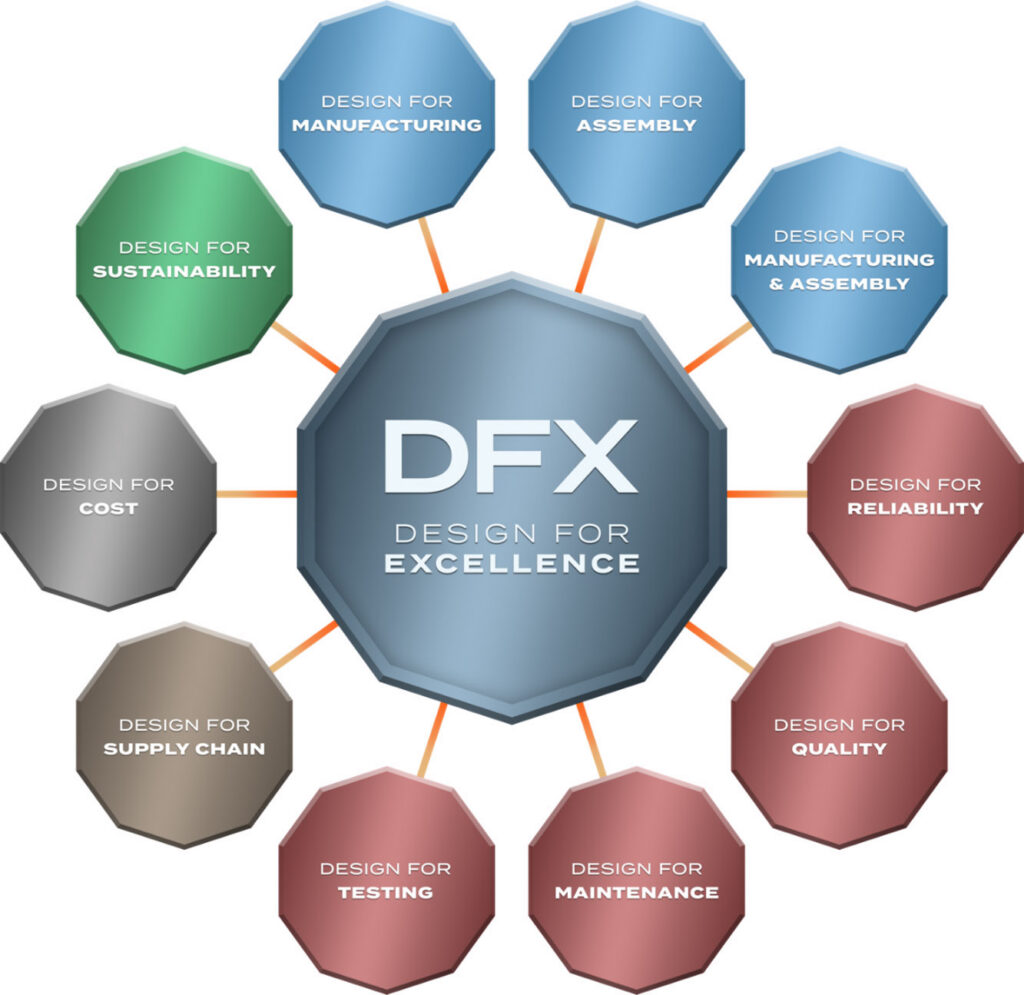
If you have followed this newsletter, you know we focus on where advanced tooling, automation, and material science converge to deliver scalable, market-ready solutions. In this edition, we launch a multi-part series exploring one of the most consequential yet misunderstood disciplines in medical technology, automotive, and smart device development: Design for Excellence (DFX).
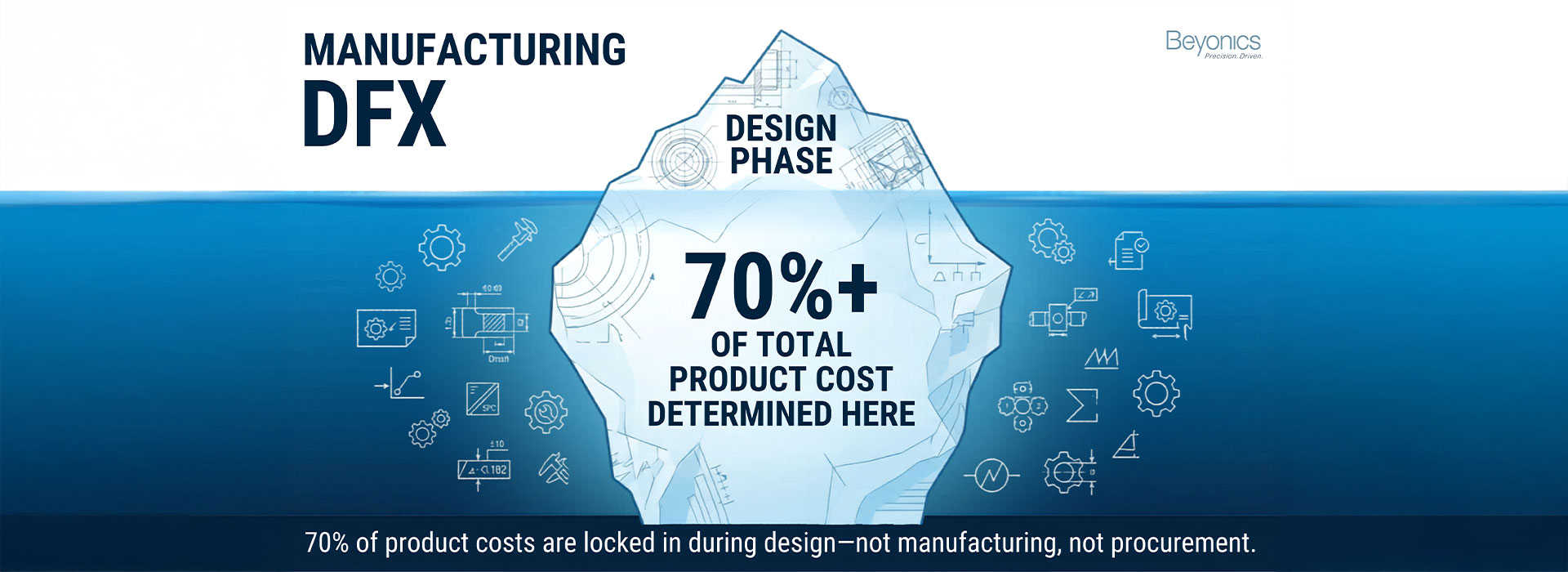
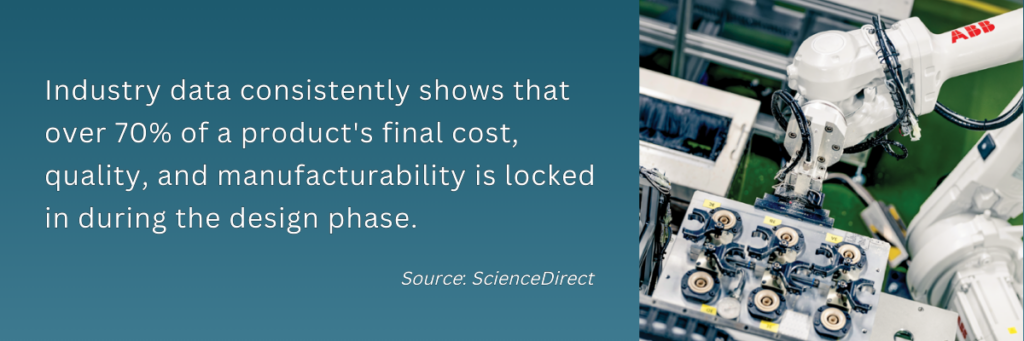
Peer-reviewed research confirms that 70-80% of a product’s final cost, quality, and manufacturability is locked in during the design phase. Yet too often, manufacturing expertise is consulted after tooling contracts are signed, and supply chain constraints are discovered when components are already on allocation.
Over the coming months, we will examine DFX through the lens of industries where precision is non-negotiable—MedTech, Mobility, and SmartTech—addressing manufacturability, assembly, reliability, supply chain resilience, and the integrated advantage of getting design right from the start.
The future of product development is collaborative. The future is DFX.
How upstream design decisions determine downstream success in regulated industries
The most critical phase of a product’s life happens long before a single unit is assembled. It occurs in the meetings, CAD models, and material selection reviews where concepts are translated into specifications.
For companies developing high-precision devices—whether a spinal surgical instrument, an automotive safety sensor, or a smart industrial IoT module—this reality presents both significant risk and tremendous opportunity. In the MedTech sector, where patient safety and regulatory compliance are non-negotiable, the stakes are even higher. A design that excels purely on functionality, without considering material flow in cleanroom injection molding, the tolerance stack-up in a miniature electronic assembly, or the implications for tooling design and fabrication, is destined for costly delays and rework.
The Beyonics Perspective
True Design for Excellence (DFX) isn’t a checklist applied after the fact. It’s a collaborative discipline integrated from the start. Our experience serving the world’s leading healthcare companies has demonstrated that the most successful products emerge when engineering teams invite manufacturing expertise to the table before design lock.
Case in Point: Supporting a Complex Spinal Surgical Device
Our work with a global medical technology leader involved the development of PediGuard® —the first patented, wireless, electronic handheld instrument capable of detecting changes in tissue type during spinal surgery. With approximately 1.6 million spinal fusion procedures performed worldwide annually, the clinical need was clear: pedicle screw misplacement during pilot hole preparation carries serious consequences, and traditional methods often require repeated radiation exposure through X-ray guidance.
The device required:
- Reliable detection of tissue type changes, distinguishing between cortical bone, cancellous bone, soft tissues, and blood.
- Real-time audio and visual feedback to surgeons during drilling.
- Integration of precision plastics, metal components, and microelectronics in a sterile-packaged handheld instrument.
- Compliance with global regulatory requirements for surgical devices.
Beyonics Contribution
Beyonics engaged as a true development partner, not merely a contract manufacturer. Our vertically integrated capabilities—encompassing in-house tooling, precision manufacturing, automation expertise, materials knowledge, and R&D laboratory resources—enabled a “one team” approach to commercialization. Key contributions included:
Tooling Innovation: Developing specific tools and fabrication processes tailored to the product’s unique design requirements
Process Validation: Meticulously validating the entire assembly process, including plastics injection molding and component sub-assembly with detailed process mapping
Vertical Integration: Managing printed circuit board design, manufacturing, and quality control through Beyonics’ Malaysian flagship facility
Cleanroom Assembly: Performing final assembly, functional testing, and sterile packaging within controlled environments
When customers invite their manufacturing partner into the conversation early, they gain not only production capacity but access to decades of process engineering expertise across multiple disciplines. Tooling design and fabrication, often overlooked in early-stage discussions, can make the difference between a product that launches on time and one that stalls in validation.